Tate Modern's A Second Life stands as Tracey Emin's most comprehensive UK retrospective in nearly two decades. Spanning everything from her 1990s appliqué textile works and My Bed to the charcoal drawings and neon texts from the past decade, the exhibition clearly charts a formal trajectory: a distinct shift from "physical evidence" to "trace".
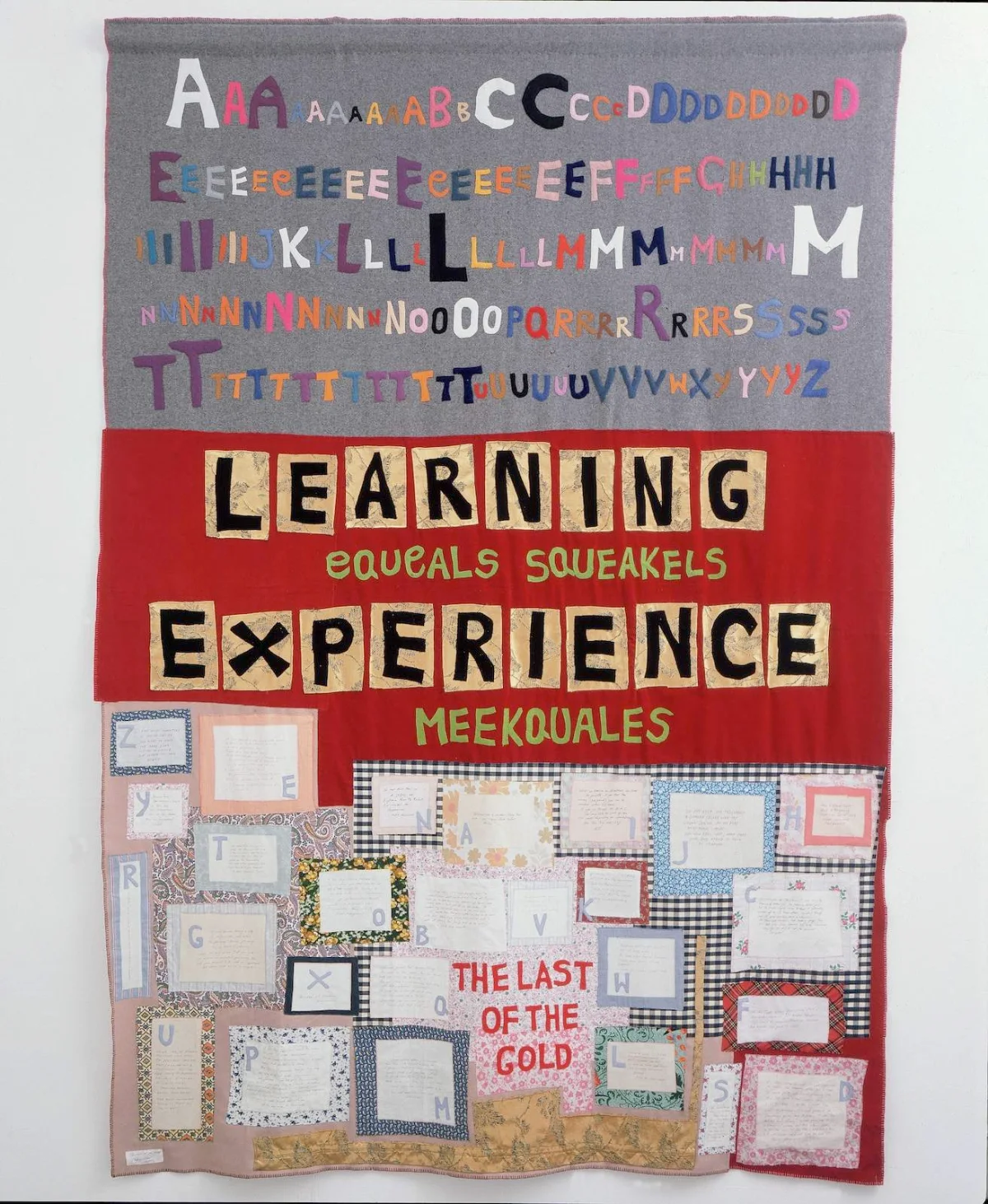
The artist's early approach relied on direct display: used condoms, discarded tissues, empty vodka bottles, and stained sheets. My Bed (1998) transported private squalor into the gallery space without mediation.
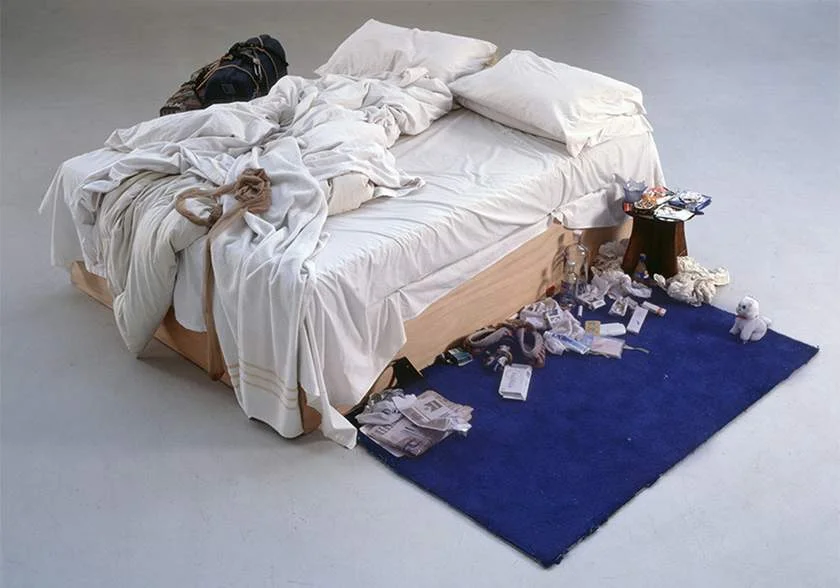
Triggering the "art or garbage" debate at the 1999 Turner Prize before later selling for £2.54 million in 2014, the work's price history serves as a concise chronicle of institutional validation.
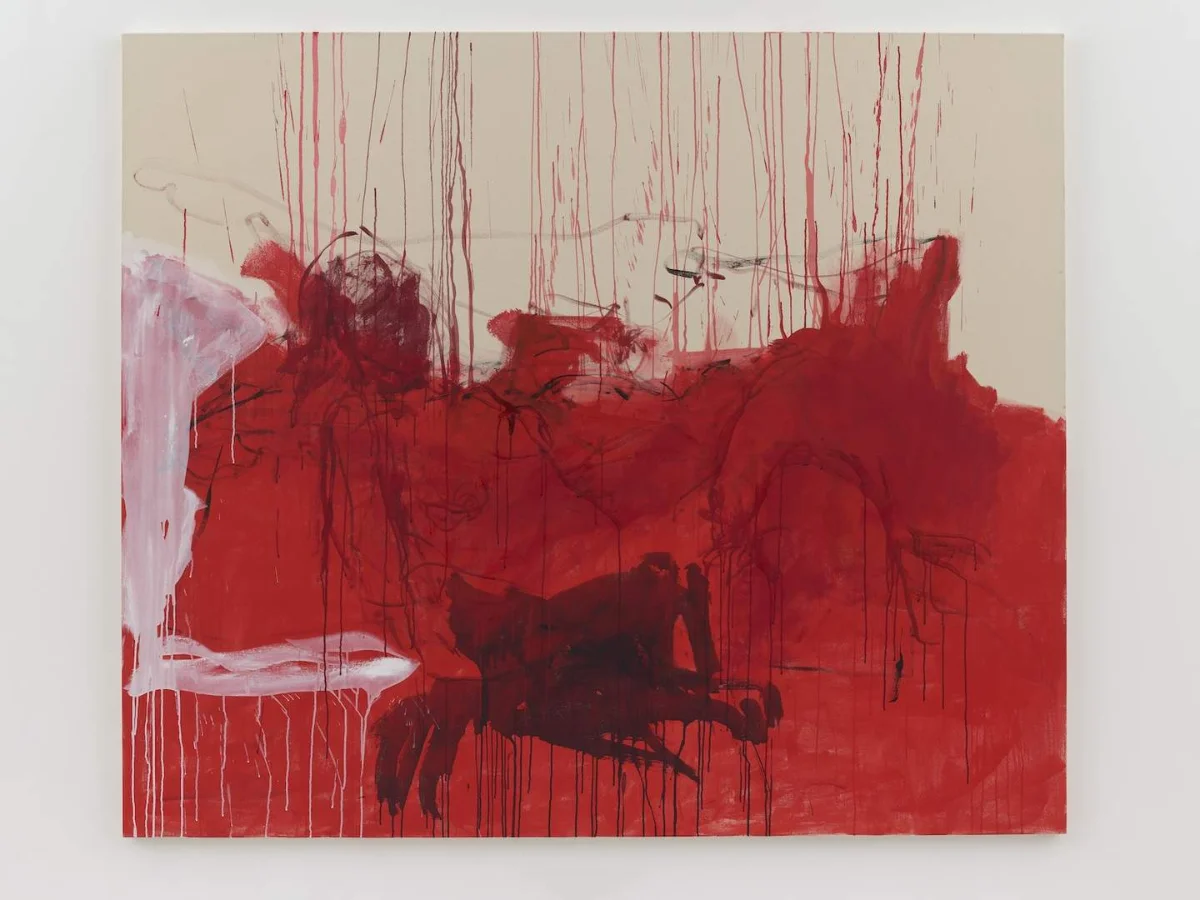
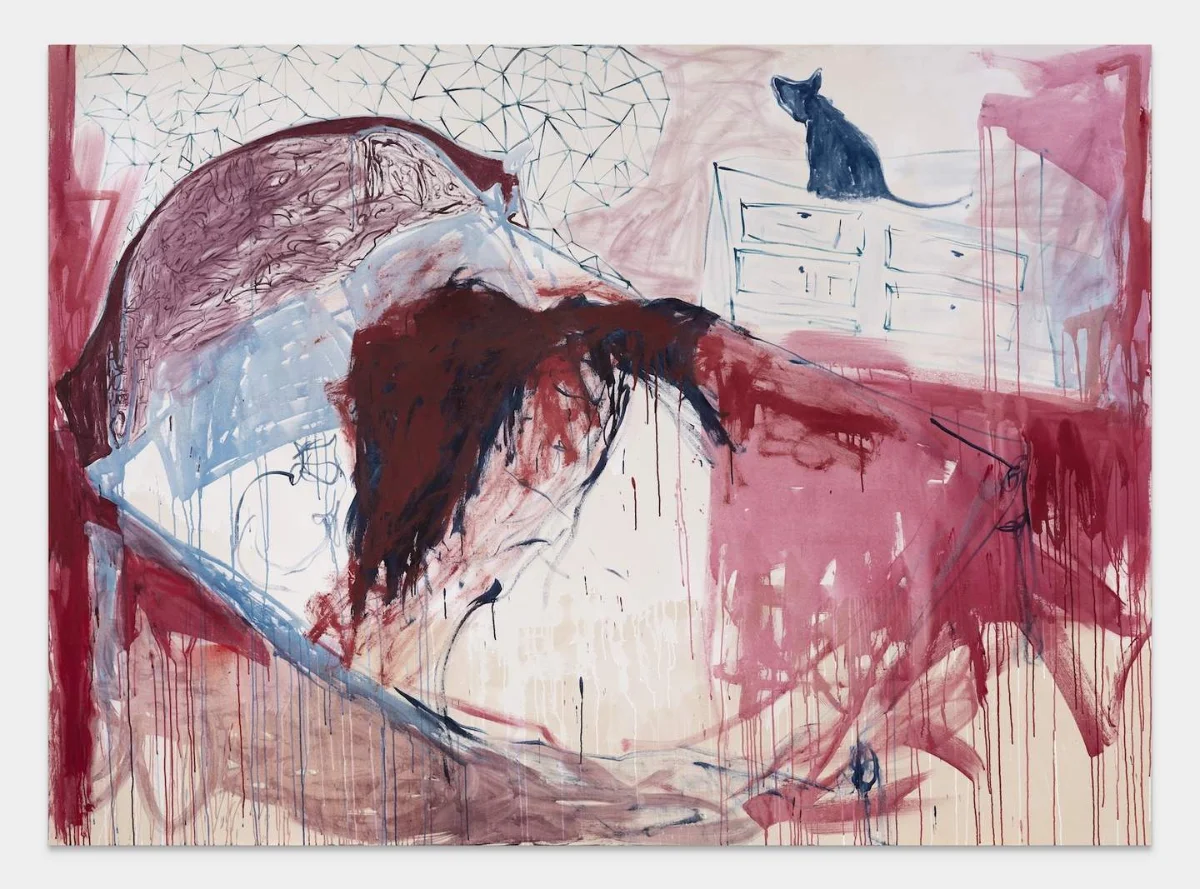
In contrast, her paintings from the past decade present a starkly different formal logic. Dominated by an intense and oppressive red palette, the female body is reduced to fragmented parts—a torso, an arm, a halved face. Trembling lines repeatedly outline, break off, and restart, resembling breathing or convulsing. Red is no longer symbolic but becomes the trace left by a bleeding body. Departing from her early provocations, these canvases no longer scream at the viewer; instead, they register acts of repair. Trauma is no longer presented as static evidence but as a trace in the making.
The most profound experience of the exhibition lies not in individual pieces, but in the sense of friction generated by the viewing process itself.
Emin translates decades of personal trauma—childhood abuse, poverty, depression—into a highly condensed formal language, securing an irreplaceable position within the lineage of contemporary female art. Concurrently, however, the market value of My Bed and Tate's institutional endorsement absorb this pain into the circulation of symbolic capital.
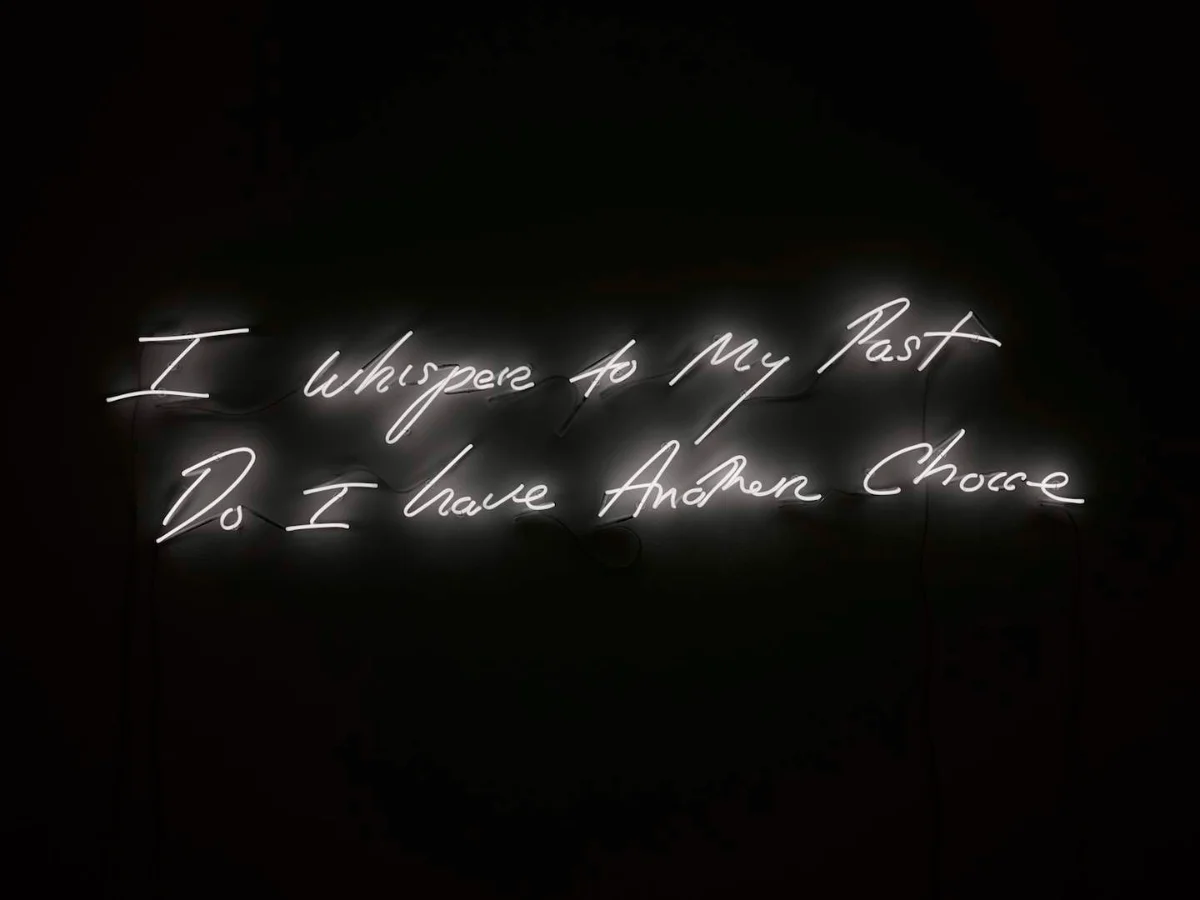
This is not a critique of the artist's sincerity; her autobiography Strangeland effectively refutes cheap accusations of "performing trauma." Rather, the question is: when institutions and the market actively absorb narratives of female trauma, is this absorption inherently selective? Which forms of suffering are archived as "worthy of display," and which remain permanently excluded from the museum collections?
A Second Life offers no answers. Instead, it underscores an often-evaded truth: Emin's "second life" is made possible precisely because her first life was successfully converted into tradable cultural capital.
The final line of Strangeland reads: "Don't be afraid to take the past head on." Emin has done exactly that.
泰特现代开展了 Tracey Emin 近二十年最完整的英国回顾展。从 1990 年代的缝纫拼接作品,到近十年炭笔绘画与霓虹灯文本,展览清晰呈现了一条形式线索:从「物证」到「痕迹」的转向。
艺术家早期创作的方式是直接陈列:用过的避孕套、被随意丢弃的卫生纸、空的伏特加瓶、满是污渍的床单……《我的床》(1998)将私密污秽不加滤镜地搬进展厅。这件作品 1999 年特纳奖引发「艺术还是垃圾」的争议,2014 年以 254.65 万英镑成交——其价格史本身就是一部机构认证简史。
而她近十年的绘画则呈现了截然不同的形式逻辑。画面以浓烈而压抑的红色为主,女性的身体被简化为不完整的局部——一截躯干、一只手臂、半张脸。颤抖的线条反复勾勒、中断、重新开始,像在呼吸,也像在痉挛。红色不再是「象征」,而是身体正在流出的痕迹本身。与早期挑衅不同,这些画面不再向观众喊叫,而是呈现为修复行为的记录。创伤不再是「物证」,而变成了进行时的痕迹。
展览最强烈的体验不在单件作品,而在观看过程本身的分裂感。
Tracey Emin 将持续数十年的创伤(童年性侵、贫困、抑郁症)转化为高度凝练的形式语言,这在当代女性艺术的谱系中奠定了不可替代的位置。但与此同时,《我的床》的市场价值与泰特的机构背书,也把这份痛苦纳入了象征资本的分配逻辑。
这不是对艺术家真诚性的质疑——她的自传足以反驳「表演创伤」的廉价批评。问题在于:当机构与市场积极吸纳女性创伤叙事时,这种吸纳本身是否是筛选性的?哪些痛苦被归档为「值得展出」,哪些始终留在美术馆门外?
《第二人生》没有回答这个问题。但它让一个常被回避的事实变得清晰:Emin 的「第二人生」之所以可能,恰恰是因为她的第一人生被成功转化为可流通的文化资本。
我对这位艺术家的感情真的很复杂。一方面思考她的作品与「特权」的联系,另一方面又欣赏她的勇气。《Strangeland》最后一行是:"Don't be afraid to take the past head on."
我想她是做到了。